the drugstore
The drugstore is a minor but telling location in the world of The Old Man and the Sea, appearing only in the aftermath of Santiago's ordeal. It functions as a concrete, everyday resource for healing, standing in sharp contrast to the vast, indifferent ocean where the old man endures his suffering. The boy Manolin, who becomes Santiago's caretaker after his return, turns to the drugstore as the first source of practical aid for the fisherman's ravaged hands, signaling the shift from the solitary, heroic struggle at sea back to the realm of human community and care.
The Drugstore as a Source of Healing
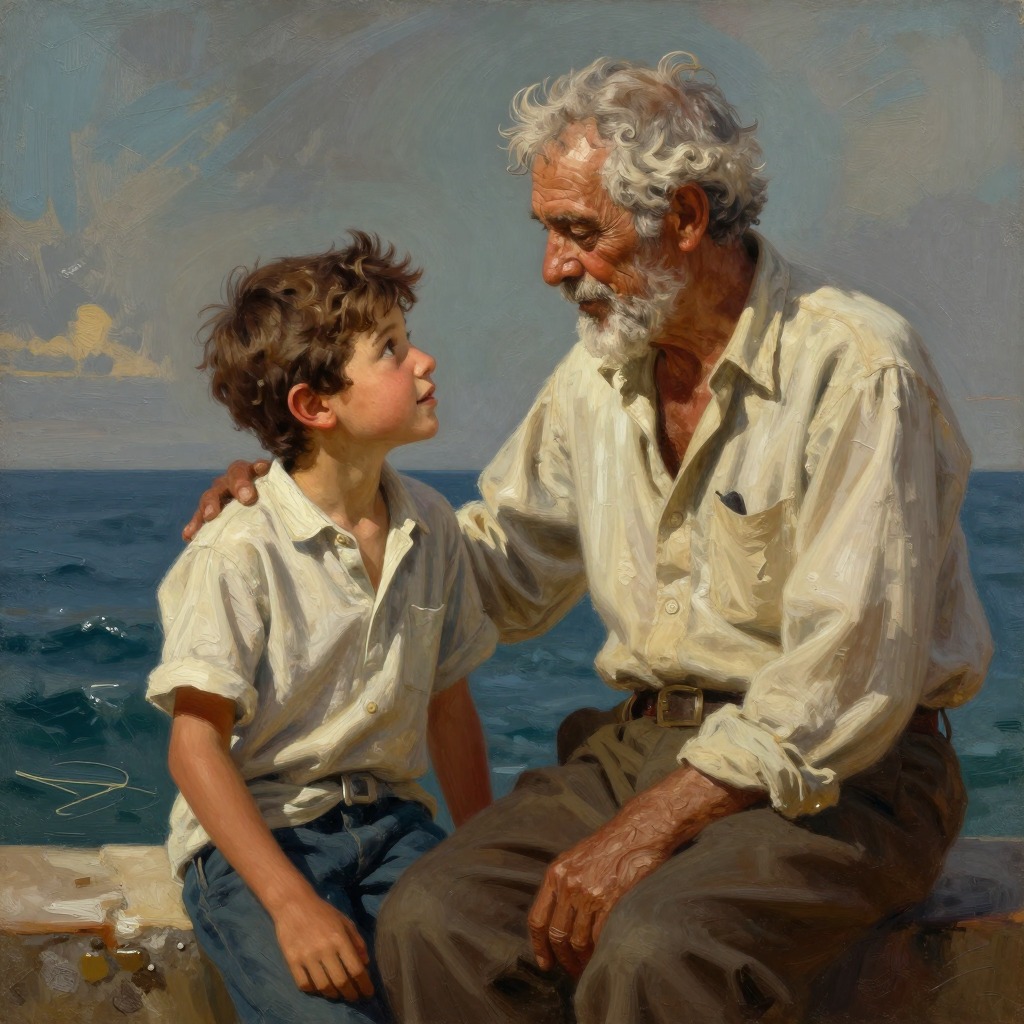
After Santiago has been carried to his shack, exhausted and with his hands deeply cut by the fishing line, Manolin takes charge of his recovery. The boy promises, "I'll bring the food and the papers... I will bring stuff from the drugstore for your hands" . This promise is the only direct mention of the drugstore in the narrative, yet it carries significant weight. It establishes the drugstore as the place where the physical damage inflicted by the sea—the line burns, the cuts from fighting sharks—can be treated with medicine, not just with the salt water and endurance that Santiago relied on alone. The drugstore represents the civilized, communal response to injury, a counterpart to the old man's solitary philosophy of enduring pain without complaint.
The Drugstore in the Context of Santiago's Philosophy
The drugstore's role is implicitly contrasted with Santiago's own attitude toward his body and suffering. Throughout his voyage, the old man treats his wounds with a mixture of stoicism and practical self-reliance: he washes his hands in the ocean, eats raw fish for strength, and tells himself, "pain does not matter to a man" . He also declares, "I'll fight them until I die" , and vows, "I'll stay with you until I am dead" , framing his endurance as a matter of will and identity. The drugstore, by contrast, offers an external, medical solution. Manolin's instinct to go there shows that the boy understands Santiago's injuries as real, physical problems requiring professional care, not just tests of character. This creates a quiet tension between the old man's code—where suffering is a private, almost sacred part of the fisherman's life—and the boy's loving, practical intervention.
The Drugstore as a Symbol of Care and Community
The drugstore is also a symbol of the community that supports Santiago, even when he is at his most isolated. Manolin's errand to the drugstore is part of a larger pattern of care: he brings coffee, food, and clean clothes, and he sits by the old man's bed. The drugstore, like the Terrace and the bodega, is one of the village's essential institutions that quietly sustains the fishermen. It is the place where the physical consequences of a life spent battling the sea can be addressed, a reminder that even the most solitary hero is ultimately part of a network of human relationships. The fact that Manolin, not Santiago, thinks to go there underscores the generational shift and the boy's role as the old man's protector in his weakness.
The Drugstore's Narrative Significance
In the broader arc of the story, the drugstore marks the final stage of Santiago's journey: the return to the human world after his transcendent but destructive encounter with the marlin and the sharks. The old man's hands, which have been his primary tools and the site of his greatest pain, are now to be treated with medicine from the drugstore. This transition from the natural, brutal healing of the sea to the artificial, gentle healing of the pharmacy encapsulates the novel's central theme: that man can be destroyed but not defeated , and that after the destruction, there is still the possibility of care, recovery, and the continuation of life within the community. The drugstore, though barely mentioned, is the quiet, essential place where that recovery begins.